Road Marking Paint and Machine Manufacturer
+86-15668659958
Road Marking Paint and Machine Manufacturer
+86-15668659958
Analysis of Bubbles in Hot Melt Marking Lines
As we all know, bubbles often appear during the hot melt marking process, such as large ones like soybeans and small ones like sesame seeds. Although these defects do not affect the service life, they can affect the appearance when viewed carefully. This has always been a problem that troubles us marking professionals!
After years of practice, industry exchanges, and expert consultations, we have summarized and found that the bubbles in the marking lines mainly come from six aspects. One method is to test where the bubbles come from, and the other is a shortcut to reduce bubbles. The specific analysis is as follows:
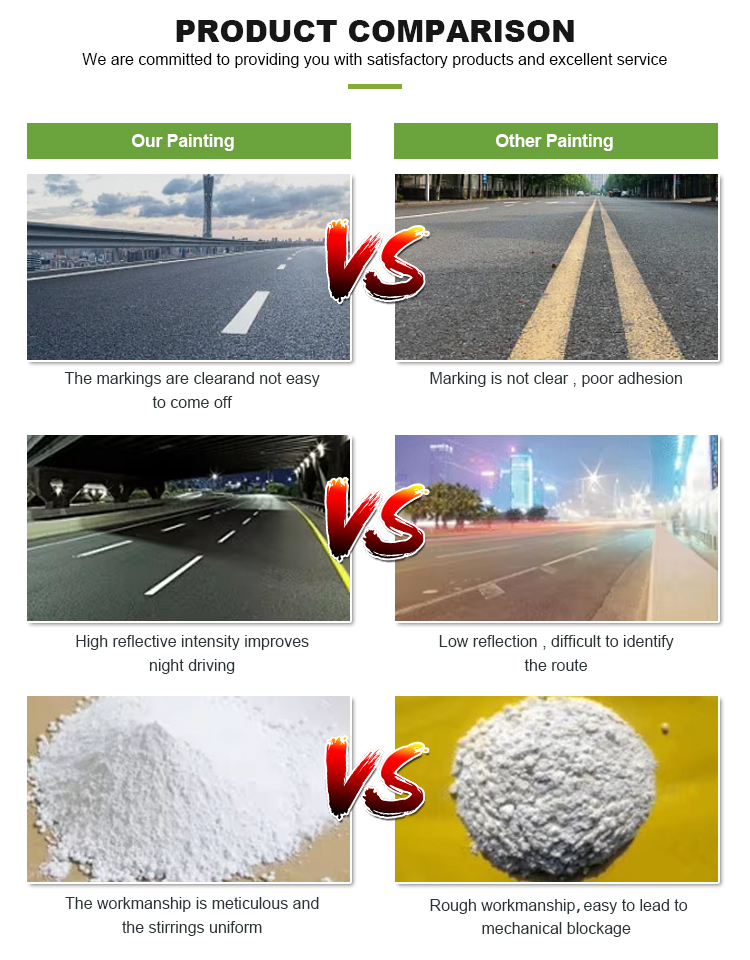
1、 6 major aspects of bubble generation
When the material temperature is around 200 degrees, it is coated (covered) on the road surface to form a marking. At the same time, it takes 3-8 minutes for the marking to dry. During these minutes, the air in the fine cracks of the road surface is heated and expands upwards.
Performance 1: If the bubbles are large and the coating ruptures at the top, this is what we want, and there will be no bubbles when they come out;
Performance 2: Some small bubbles have not yet emerged, and the markings are dry, leaving them in the coating or at the bottom of the markings. This not only does not affect the appearance, but also will not be pursued by anyone;
Performance 3: The bubbles have just emerged from the film surface and have not yet burst. The coating is dry, leaving behind pockmarks. Although it does not affect the service life, once the owner conducts in-depth research, it can be a headache!
Solution reference: Raise the material temperature by 5-10 degrees to improve the leveling of the coating, reduce the viscosity of the coating, and allow bubbles to escape; Or lower the material temperature by 5-10 degrees, increase the viscosity of the coating, prevent bubbles from rising, and keep them within the marked line!
Moisture in damp road surfaces can evaporate due to heat and produce bubbles. Construction can only be carried out when the road surface is dry, and special attention should be paid to the moisture and humidity of the road surface in the morning and evening of winter.
Before the bottom oil is dried, the solvent in the bottom oil has not completely evaporated, and it will produce bubbles when heated and evaporated. Scratching can only be applied after the bottom oil is completely dry, otherwise it may not only cause bubbles, but also lead to the explosion of the undried bottom oil
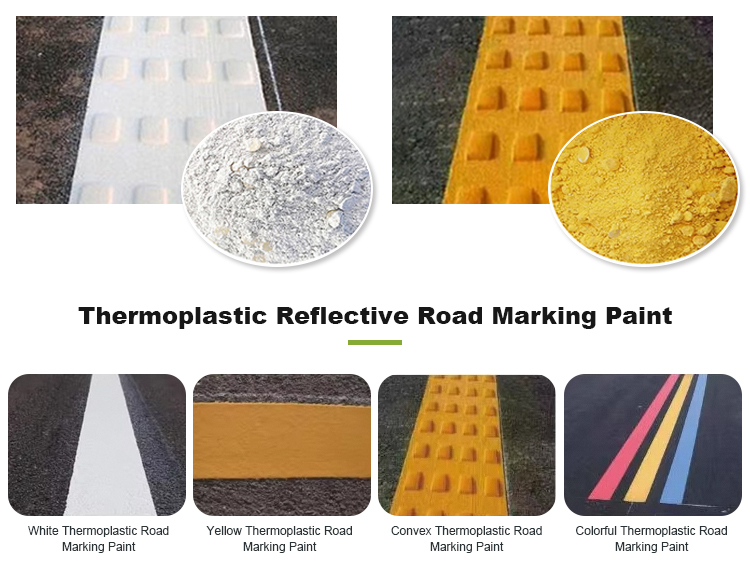
Taking highways as an example, high-grade highways often use modified asphalt. The modifier often produces bubbles when exposed to heat. After in-depth research by the owner, about 0.1% soybean oil (or salad oil) can be added during burning, sacrificing the compressive strength of the marking and improving the leveling of the material to reduce bubbles and meet the owner’s requirements.
The cement pavement with excessive alkalinity is prone to foaming, so I can only overcome it by cleaning the floating ash and applying a second layer of bottom oil! It’s just a reduction, not a complete elimination!
Encountering this kind of road surface, symbolizing “winning”, can only be balanced by applying two layers of bottom oil and adjusting the material temperature!
2、 Method for verifying where bubbles come from
Check whether the bubbles are caused by the material or the road surface: You can use the same material to draw a knife on an aluminum or iron plate. If no bubbles are generated, it is not a problem with the material! You can also push the trolley to other road sections to draw a small section for experimental comparison!
3、 Shortcut to reducing bubbles
When the road surface is dry and the bottom oil is completely dry, bubbles are generated. The shortcut to reducing bubbles is to adjust the material temperature or add about one thousandth of soybean oil during burning to adjust the leveling of the material.

Our company is a professional manufacturer of road hot-melt coatings, road retroreflective measuring instruments, and road marking machines. If you are interested, please feel free to communicate with me via email at any time export@toproadtraffic.com


