Road Marking Paint and Machine Manufacturer

+86-15668659958
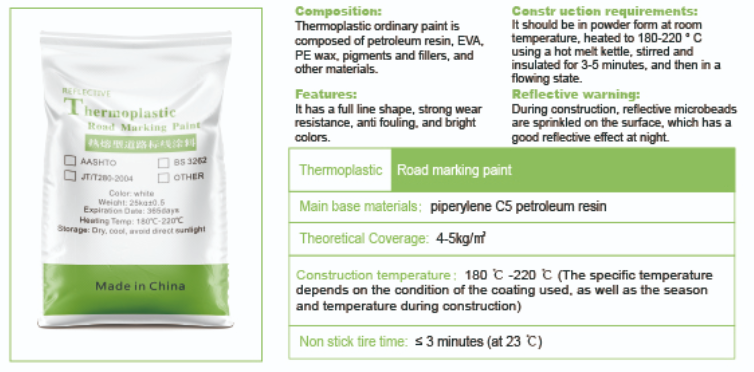
Problems and Reasons for the Construction of Hot Melt Road Coatings in Winter

15 3 月, 2026
  1. Glass beads are non stick and prone to detachment.
    Firstly, it is related to the temperature of the hot melt coating when it reaches the ground. In winter, due to the low temperature, the temperature drops quickly. It is necessary to ensure that the material temperature reaches around 185 degrees when it reaches the ground. Otherwise, if the temperature is too low, the coating will solidify too quickly, and the glass beads will not settle easily. The glass beads will float on the surface and easily fall off. The temperature should be appropriately raised for construction. Secondly, the settlement of glass beads is directly related to their particle size. If the particle size is too large, the beads are not easy to settle, causing them to float on the surface of the marking line and easily fall off. Glass beads with appropriate particle size should be selected for construction. Once again, it is related to the thickness of the markings. If the marking is too thin, there is no space for the glass beads to settle, or only a small part can settle, and most of them are exposed and easily detached. During construction, we should not blindly pursue cost, but also ensure the thickness of the markings.
  2. Bubbles and detachment occur in winter.
    The reason is nothing more than related to gas, which is transformed from water.
    One reason is that the primer sprayed is not dry. The temperature is low in winter, and the primer that can dry in 20 minutes in summer may take 2 hours to completely dry in winter. Construction teams often cannot wait for the primer to fully dry before construction due to tight deadlines. When 180 degree paint is poured onto the non drying primer, the water evaporates into gas instantly, causing black spots to break through the paint in areas with high gas content and unable to bulge out in areas with low gas content. This creates a barrier between the marking and the road surface, resulting in the marking being unable to adhere to the ground and easily falling off.
    Once again, it is related to the winter construction time and environment. In winter, there is a lot of fog, especially at night and in the morning. A lot of fog represents a lot of moisture. Just like the principle that the coating does not dry, the reason for the formation of bubbles and detachment is also the moisture in the fog.
  3. Some asphalt pavements have large gaps, which may have been caused by previous rain, snow, or watering. Moisture exists in the gaps in the form of frozen ice, which appears dry and devoid of moisture on the surface. However, once exposed to high temperatures, it can instantly form water vapor, leading to the appearance of bubbles and detachment.
    So we need to pay attention to the control of material temperature during winter construction, which should be at least 20 degrees higher than during summer construction, to ensure that the temperature of the material coming out of the hopper is around 185 degrees. We can turn on the front and rear fires of the handcart material bucket and hopper, and if necessary, use a flamethrower to bake the ground to heat up and remove moisture. Additionally, it is advisable to avoid construction at night, in the morning, and during foggy or rainy days, especially in areas with high humidity such as mountains, reservoirs, and beaches. Once again, try to ensure that construction is carried out according to standards, such as the thickness of markings and the type of glass beads. Blindly reducing costs and rushing to meet deadlines can greatly reduce the probability of problems.

Our company is a professional manufacturer of road hot-melt coatings, road retroreflective measuring instruments, and road marking machines. If you are interested, please feel free to communicate with me via email at any time export@toproadtraffic.com

NEED ANY ROAD MARKINGS INDUSTRY SOLUTIONS?