Road Marking Paint and Machine Manufacturer
+86-15668659958
Road Marking Paint and Machine Manufacturer
+86-15668659958
If you’re in the road construction or traffic safety business, you’ve probably noticed something over the last few years: everyone is asking about hot-melt marking paint. Not the solvent-based stuff, not the water-based kind — the 100% solids, thermoplastic powder that melts at 200°C and bonds straight to asphalt or concrete.
Here’s why it’s taking over, and what you need to know before you buy a production line.
Look at the numbers. Africa alone needs roughly $100 billion a year in infrastructure investment, and a huge chunk of that goes into roads. Southeast Asia, the Middle East, Latin America — every region is expanding its highway networks. More roads mean more lane lines, crosswalks, stop bars, and directional arrows. And the spec that keeps showing up in tender documents? Hot-melt thermoplastic.
It’s not a coincidence. Road authorities have figured out that hot-melt lasts 3–5 times longer than cold paint in most climates. That means fewer re-marking cycles, lower long-term maintenance costs, and safer roads between applications.
Cold solvent paint wears off in 6–12 months on high-traffic roads. Water-based paint does a bit better, maybe 12–18 months. Hot-melt? On a typical urban arterial, you’re looking at 24–36 months of service life. On highways with proper glass bead dispersion, it can go even longer.
The reason is simple physics. Hot-melt is applied at 180–220°C. It flows into the micro-texture of the pavement, cools, and forms a mechanical bond — not just a surface film. It’s also 100% solids, so there’s zero shrinkage as it cures. What you put down is what stays down.
Night-time visibility is where hot-melt really earns its keep. When you drop glass beads into the molten paint, they embed partially and protrude from the surface. Headlight hits them, light bounces back to the driver. Done right, you’re getting 150–250 mcd/m²·lx of retroreflectivity — well above most national minimums.
Countries that have adopted strict night-visibility standards (EU EN 1436, US MUTCD, Australian AS/NZS 4049) are essentially mandating thermoplastic for high-speed roads. That’s a structural demand driver, not a trend.
Solvent-based paints release VOCs. Water-based paints use energy-intensive drying and struggle in cold or humid conditions. Hot-melt has zero VOCs, no solvents, and no water. It’s inert once cooled. Regulatory bodies in Europe, North America, and increasingly in Asia are tightening VOC limits — and hot-melt passes without modification.
It’s also recyclable. Old markings can be milled, re-melted, and re-formulated. That’s a selling point that resonates with contractors bidding on “green” infrastructure projects.
Here’s the part most buyers miss. Hot-melt paint is heavy and low-value-per-kilogram. Shipping it across oceans eats your margin fast. If you’re importing finished bags from China or Europe to sell in, say, Kenya or Peru, you’re paying more in freight than in product.
That’s why smart distributors and contractors are setting up their own production lines locally. A mid-size line (3–5 tons per hour) can be installed in a 500–800 m² warehouse, run by 3–4 workers, and produce paint at 30–50% below landed import cost. The raw materials — resin, glass beads, filler, pigment — are globally available and cheaper to ship in bulk than finished product.
Don’t let suppliers oversell you on “turnkey” without understanding each station. Here’s the real breakdown:
Materials move by screw conveyor or pneumatic conveying. For a clean operation, go with closed pneumatic systems — less dust, less waste, happier workers.
This is where accuracy matters. A good line uses loss-in-weight feeders for each major component, with PLC-controlled batch recipes. Tolerance should be ±0.5% on resin and pigment, ±1% on filler. If your supplier can’t guarantee that, walk away — formula inconsistency is the #1 cause of field failures (cracking, peeling, poor reflectivity).
Two types dominate the market:
表格
| Type | Capacity | Best For |
|---|---|---|
| Plowshare mixer | 1–3 tons/batch | Small to mid operations, fast color changes |
| Ribbon blender | 3–10 tons/batch | High-volume, single-color production |
Mixing time: 8–15 minutes per batch. The mixer should have a jacketed heating option if you’re producing in cold climates — cold resin doesn’t disperse evenly.
Hot-melt is sold as powder, granules, or blocks. Most global buyers prefer powder or granules because they melt faster in the application kettle. The line should include:
Non-negotiable. Titanium dioxide and calcium carbonate dust are respiratory hazards. A central pulse-jet baghouse connected to every dust-generating point (silos, mixer discharge, bagging) should be part of the quote. If it’s an add-on, the supplier is cutting corners.
Modern lines run on PLC + HMI with recipe storage, batch tracking, and alarm logging. You want:
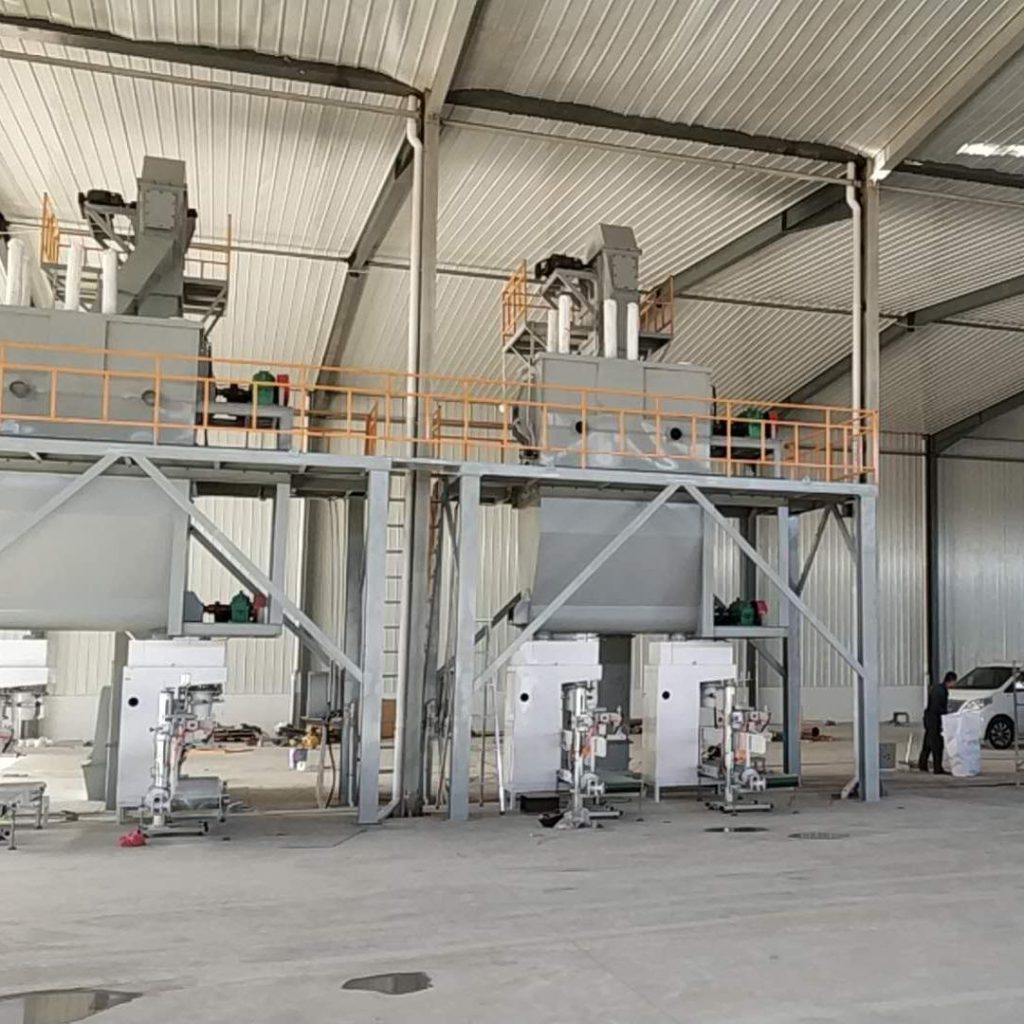
表格
| Parameter | Entry-Level | Mid-Range | Industrial |
|---|---|---|---|
| Output | 1–2 t/h | 3–5 t/h | 8–15 t/h |
| Mixer volume | 500–1000 L | 1500–3000 L | 4000–8000 L |
| Dosing accuracy | ±1–2% | ±0.5–1% | ±0.3–0.5% |
| Automation | Semi-auto | PLC auto | Fully auto + SCADA |
| Workers needed | 5–6 | 3–4 | 2–3 |
| Footprint | 200–400 m² | 500–800 m² | 1200–2000 m² |
| Installed power | 80–150 kW | 200–350 kW | 400–700 kW |
A $80,000 line that produces inconsistent paint will cost you $200,000 in rejected batches and warranty claims within a year. Focus on dosing accuracy, mixer quality, and after-sales support — not the sticker price.
C5 resin from different suppliers has different softening points and melt viscosities. Your line should be tested with the actual raw materials you’ll source locally. A reputable manufacturer will run trial batches with your materials before shipping.
A 5 t/h line needs a reliable 3-phase power supply of at least 250 kW. If your facility can’t support that, you either upgrade the electrical system or downsize the line. Also plan for raw material storage (you’ll want 2–4 weeks of inventory) and finished goods warehousing.
Always insist on an FAT at the manufacturer’s facility before shipment. Bring your own raw materials, run 3–5 consecutive batches, and verify:
If the manufacturer won’t accommodate an FAT, that’s a red flag.
Consumables: mixer blades, screen meshes, bagging machine heat seals, dust filter bags. Your supplier should provide a 2-year spare parts package and at least 5–7 days of on-site commissioning + operator training. Ask for the training manual in your language before signing.
For reference, here’s a common formulation (percentages by weight):
表格
| Component | % | Function |
|---|---|---|
| C5 petroleum resin | 18–22% | Binder |
| Calcium carbonate | 55–65% | Filler / body |
| Titanium dioxide (rutile) | 8–12% | Pigment (white) |
| Glass beads (premix) | 10–15% | Retroreflectivity |
| PE wax / EVA | 2–4% | Flow modifier |
| DOP / plasticizer | 1–2% | Flexibility |
| Anti-settling / UV stabilizer | 0.5–1% | Additive |
Yellow paint swaps TiO₂ for yellow pigment (lead chromate or organic azo yellow) and typically adds 1–2% more resin for better color hold.
Hot-melt road marking paint isn’t going anywhere. As long as countries keep building roads and raising safety standards, demand will keep growing. The question isn’t whether to get into production — it’s whether you set up a line that produces consistent, spec-meeting paint from day one, or you learn the hard way through rejected batches and lost contracts.
If you’re evaluating production lines, start with your target output, work backward to the mixer size, and never compromise on dosing accuracy. That single decision determines more about your product quality than any other component in the line.
Our company is a professional manufacturer of equipment for producing road hot-melt coatings. If you are interested, please feel free to contact me via email at any time export@toproadtraffic.com