Road Marking Paint and Machine Manufacturer
+86-15668659958
Road marking paint, the core coating material for traffic network safety signs
Road marking paint is a specialized core material used for delineating traffic signs on various transportation scenarios, including urban municipal roads, highways, factory and industrial park roads, and rural highways. After application and curing, it forms a functional marking layer on asphalt or cement surfaces, conveying traffic information such as lane separation, directional guidance, and prohibition warnings through clear lines, arrows, and text symbols. As an indispensable foundational component of the entire traffic network safety management system, it provides essential visual guidance support for the orderly and smooth flow of daily traffic.
The core functional characteristics of road marking paint lie in its ability to form a strong bond with the pavement surface after application, ensuring long-term adaptation to the complex and challenging conditions of open-air exposure. Road markings are constantly exposed to the natural environment, enduring repeated abrasion from vehicle tires, as well as extreme temperatures, rain exposure, and prolonged UV radiation. Ordinary civilian paints simply cannot maintain their integrity under such harsh conditions over time. Road marking paint is specifically formulated to meet these extreme operational requirements, with cured coatings exhibiting exceptional physical and mechanical strength. Its wear resistance, impact resistance, and weathering performance have been extensively validated through engineering practice, ensuring that the markings remain intact and clearly visible on the road surface for extended periods without significant wear, cracking, or peeling in a short time.
Road marking paints with different technical routes can be adapted to various construction scenarios and usage requirements. Among them, hot-melt road marking paints are currently the most widely used category in domestic road applications. During construction, they are directly applied to the road surface in a molten state under high temperatures, rapidly solidifying upon cooling. This allows traffic to resume shortly after completion, significantly reducing the impact of road marking construction on normal traffic flow. Cold-cure solvent-based road marking paints do not require large hot-melt construction equipment and can be applied directly using conventional spraying devices. They are particularly suitable for small-scale, scattered road marking touch-ups in residential communities, factory or industrial park roads, and other similar scenarios, offering high construction flexibility. Two-component reactive road marking paints achieve curing through a chemical reaction between the two components. The resulting coating exhibits high density, excellent stain resistance, and outstanding wear resistance, making them ideal for use on urban arterial roads with heavy traffic or high-speed highway entrances and exits where road markings wear out quickly.
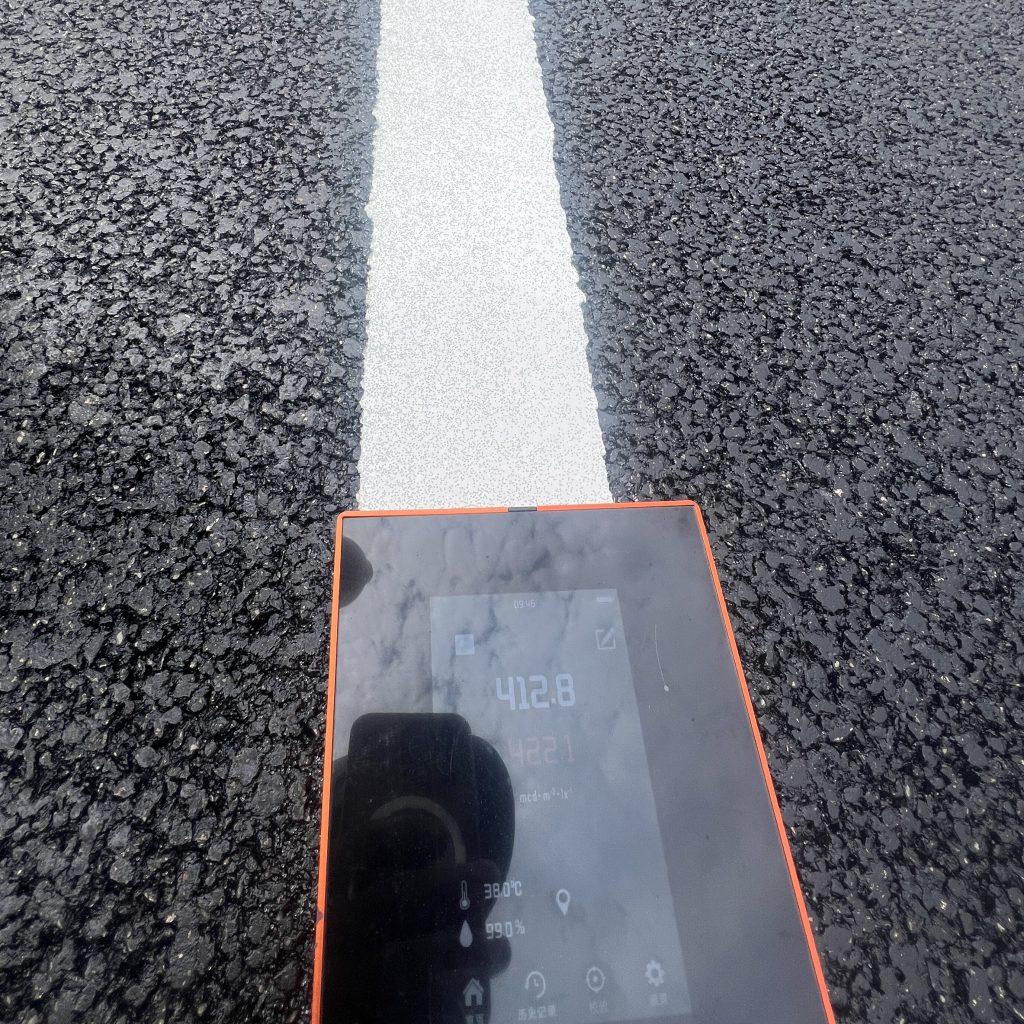
To meet the safety requirements for nighttime road traffic, different specifications of reflective glass beads can be mixed into the road marking paint system as needed. During construction, glass beads are evenly scattered onto the surface of the markings while the paint is being applied. Some beads are semi-embedded in the partially cured paint layer. Once the paint fully solidifies, these beads become firmly embedded on the marking surface. When the headlights of nighttime vehicles illuminate the markings, the glass beads reflect the light back toward the driver’s line of sight, enabling clear visibility of road markings from great distances at night. This significantly enhances nighttime road safety and reduces the likelihood of traffic accidents caused by poor visibility. Additionally, high-visibility rain-night reflective marking systems can maintain excellent reflectivity even in wet and waterlogged conditions, addressing the issue of severely reduced reflectivity in conventional markings during rainy nights.
The color system of road marking paints is subject to stringent industry standards, with different colors serving distinct functional purposes. White markings are primarily used for delineating same-direction lanes, lane edges, and directional arrows, while yellow markings are mainly employed for separating opposite-direction lanes and warning signs prohibiting crossing. The stark color contrast enables road users to quickly identify the type and meaning of markings from a distance, allowing them to make correct driving decisions without close inspection. The weather-resistant pigments selected in the paint formulation undergo specialized screening, ensuring they remain resistant to significant fading under prolonged outdoor UV exposure. Once applied, road markings can maintain clear and conspicuous colors for extended periods, preventing issues such as dulling, whitening, or severe loss of visibility in a short time.
From the perspective of construction adaptability, road marking paints can effectively accommodate the two most common road substrates: asphalt pavement and cement concrete pavement. The special adhesive components added to the paint formulation can penetrate the fine pores on the road surface during application, forming strong adhesion with the substrate. This ensures that the markings do not peel off entirely under repeated vehicle traffic. To address the issue of alkaline efflorescence on cement surfaces, some specialized road marking paints also incorporate special alkali-resistant components, preventing chemical reactions between the alkaline substances and paint ingredients. This avoids a decline in adhesion and layering issues, significantly extending the service life of markings on cement pavements.
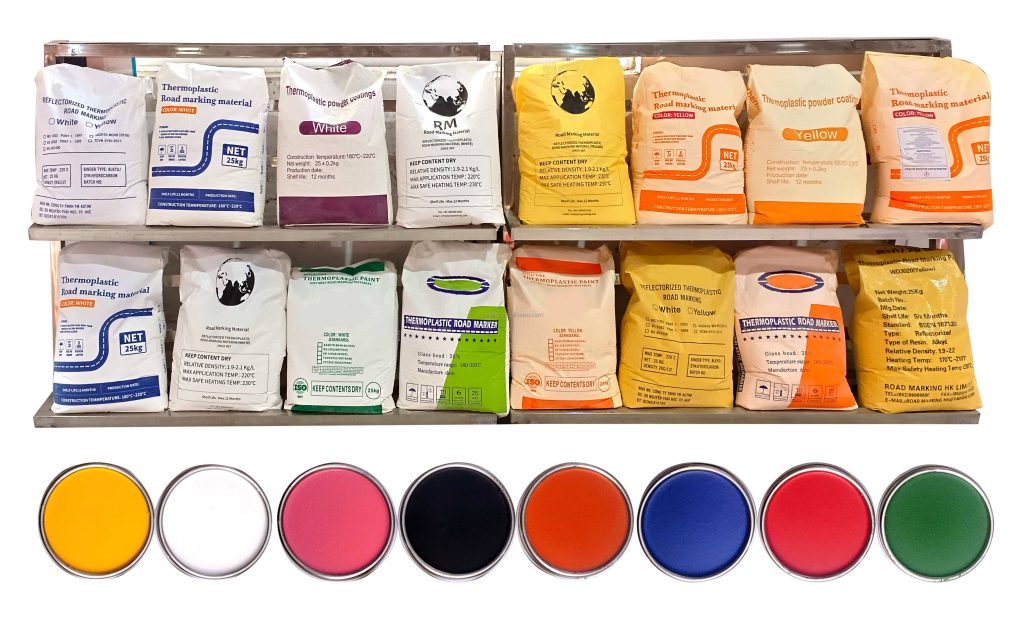
In special traffic scenarios, road marking coatings can also obtain additional functions by adjusting the formulation components. For example, vibration type markings used in deceleration sections are formed on the surface of the markings through specialized molds during the paint application process. When vehicles roll over the markings, significant vibrations and noise are generated, reminding drivers to consciously slow down. This is particularly suitable for use in long downhill sections, toll station entrances and exits, school entrances, and other scenarios that require forced deceleration. Colored anti slip marking coating with high hardness anti slip aggregate added internally. The friction coefficient of the formed marking surface is much higher than that of ordinary asphalt pavement. After marking on bends, tunnel entrances and exits, and steep slopes, it can greatly improve the anti slip performance of the road surface and reduce the risk of vehicle skidding.
Of course, there are also several details to pay attention to during the construction process of road marking coatings. Before starting the drawing operation, the dust, mud, and oil stains on the road surface should be completely cleaned to ensure a strong bond between the paint and the road surface. The ambient temperature during construction should be controlled within the range required by the process to avoid forced construction in harsh weather conditions of low temperature and high humidity, which may affect the curing and forming quality of the marking. Before the marking is completely solidified, temporary traffic control measures should be taken to prevent the wet marking from being crushed by vehicle tires and damaging the surface shape.
As a widely used basic material in road traffic engineering, road marking coatings provide clear and eye-catching road traffic signs for all levels of transportation networks across the country with stable weather resistance and wear resistance, clear identification functions, and flexible scene adaptability. They continuously support the orderly and safe operation of the entire road traffic system and are important basic materials for ensuring daily traffic efficiency and safety.
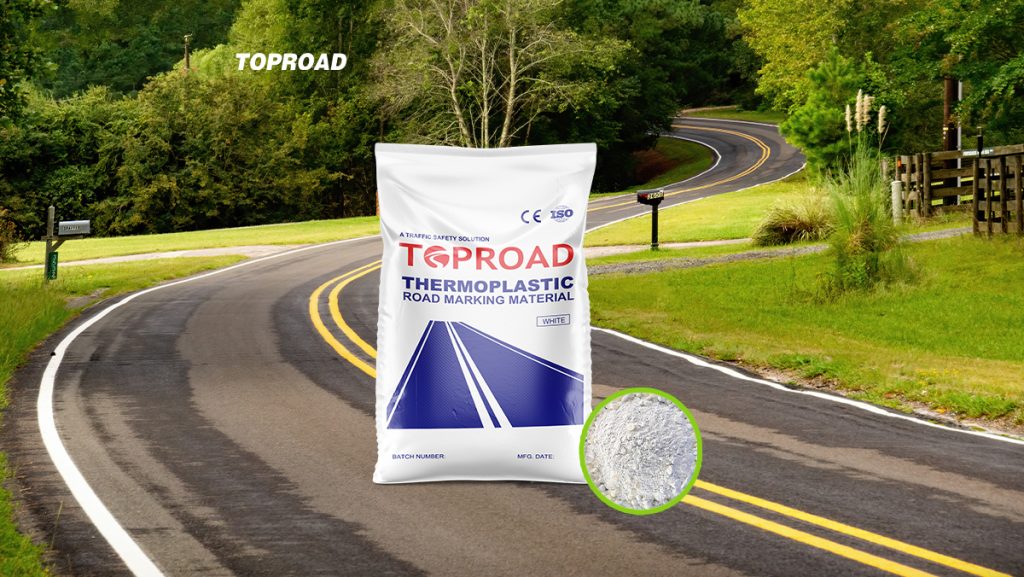
Our company is a professional manufacturer of equipment for producing road hot-melt coatings. If you are interested, please feel free to contact me via email at any time export@toproadtraffic.com