Road Marking Paint and Machine Manufacturer
+86-15668659958
Road Marking Paint and Machine Manufacturer
+86-15668659958
In the actual operation of road marking engineering, the ideal construction environment is often encountered but not sought after. Whether it’s scorching heat in the sky, piercing cold in the harsh winter, or rainy and humid rainy seasons and coastal salt spray areas, special climates will pose severe challenges to the construction quality, product performance, and service life of marking coatings. For engineering and construction teams engaged in frontline construction, mastering and flexibly responding to construction techniques under these climatic conditions is the key to ensuring smooth project delivery, avoiding quality risks, and winning industry reputation. TOP ROAD Transportation Technology Co., Ltd. provides targeted solutions for various coatings, including hot melt, cold coat, and two-component coatings, in special climates based on project practices and extensive process summaries from multiple regions across the country.
1、 Construction response under high temperature and scorching heat climate
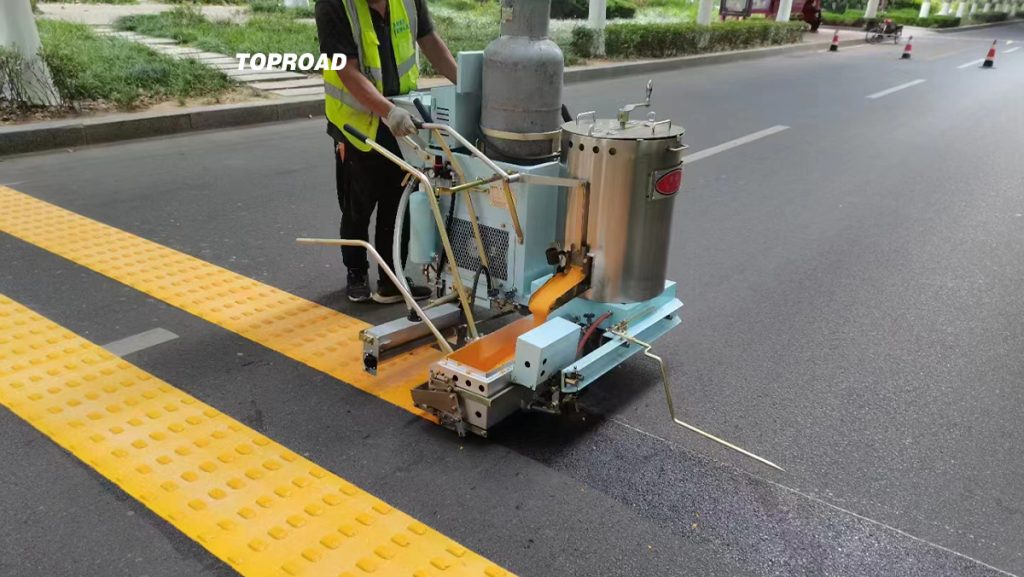
During the summer season, the sustained high temperatures and intense ultraviolet radiation pose multiple challenges to the construction of marking lines. The primary issue is the anti fouling ability of hot melt coatings. At high temperatures, the road surface temperature often exceeds the norm, and the drying time of hot-melt coatings is significantly prolonged after being applied. The coating softens, and premature rolling by vehicles can easily lead to contamination and deformation of the markings. The key to solving this problem lies in extending the opening time and selecting anti pollution formula coatings for the season. TOP ROAD Transportation Technology Co., Ltd. will make targeted adjustments to the summer product formula based on the climate characteristics of different regions to improve the softening point and drying speed of the coating. During construction, it is recommended to choose a time when the temperature is relatively low in the morning and evening, and to do a good job of on-site traffic diversion to ensure that the markings have sufficient cooling and solidification time.
Secondly, high temperatures accelerate the drying of solvent based (cold paint) coatings, which is both an advantage and a challenge. The advantage is that it dries quickly, but the disadvantage is that if the construction environment is particularly dry and hot, the phenomenon of “dry spraying” is prone to occur during spraying, which affects the leveling and adhesion of the paint film. The technique lies in increasing the amount of diluent used appropriately according to the on-site temperature, and stirring thoroughly to maintain the appropriate construction viscosity and ensure even spraying. Similarly, high temperature has a significant impact on two-component coatings, especially in accelerating the curing reaction rate. At this point, it is necessary to reduce the proportion of liquid curing agent added to prevent the rapid reaction from causing the coating to solidify inside the equipment or generate a large number of bubbles and wrinkles on the marking surface. TOP ROAD two-component coating products will provide advice on the addition of curing agents at different temperatures, and their technical service personnel can also provide accurate proportioning guidance on site.
Road marking engineering
2、 The key to construction in low temperature and severe cold climate
The enemy of winter construction is low temperature, which directly affects the fluidity and curing reaction of the coating.
For hot melt coatings, low temperature can cause difficulty in melting the coating in the hot melt kettle, and the temperature drops sharply after discharge, resulting in a sharp decrease in fluidity and easy problems such as wire breakage, drawing, and pitting on the surface of the marking line. During construction, it is necessary to significantly increase the boiling temperature and ensure full insulation measures from the hot melt kettle, handcart to the hopper to reduce heat loss. For example, the paint can be boiled in advance over low heat on the way to the construction site, and construction can be carried out immediately upon arrival. TOP ROAD Transportation Technology Co., Ltd. reminds that special winter formula hot melt coatings should be used in winter. Their resin and additive systems can maintain good fluidity and adhesion at lower temperatures, preventing cracking of markings due to temperature difference shrinkage. At the same time, during winter construction, special attention should be paid to keeping the road surface dry, avoiding road icing, frost, or moisture, otherwise it is easy to cause blistering or later detachment of the markings.
For ambient temperature solvent based (cold paint) and two-component coatings, low temperature will significantly prolong the drying and curing time. The non stick time of cold paint at low temperatures may need to be extended by more than twice. If traffic is opened in advance, the wear resistance and stain resistance of the markings will be severely damaged. Therefore, sufficient maintenance time must be reserved and strictly managed through measures such as fencing and warning signs. Two component coatings react slowly at low temperatures, and it is necessary to increase the amount of curing agent appropriately or use specialized low-temperature curing agents within the allowable range to ensure that they are cured within a reasonable time and reach the design strength. All base adhesives (primers) will also have an extended drying time at low temperatures, and it is important to confirm that they have completely dried and formed a film before construction.
3、 Construction strategies for rainy, humid, and high humidity environments
During the rainy season or in areas with high air humidity (such as underground parking lots, southern rainy season, coastal areas), water vapor is the number one enemy for marking construction.
Moisture on the road surface is the direct cause of quality issues with various coatings. Whether it is hot melt, cold paint, or two-component, construction on damp roads may cause coating bubbles, bulges, decreased adhesion, and even detachment. Therefore, it is necessary to ensure that the road surface is completely dry before construction. During construction after rain, it is not only necessary to wait for the surface water to dry, but also to confirm that the moisture in the roadbed has fully evaporated. If necessary, a fire gun or hair dryer can be used to assist in local heating and dehumidification.
Moisture resistance of materials is equally important. Whether it is bagged hot melt coating powder, or bottled cold paint and two-component coatings, attention should be paid to waterproofing and moisture resistance during storage and transportation. Once hot melt coatings become damp, a large amount of steam will be generated during boiling, which can easily cause safety accidents, and the markings are prone to yellowing after construction. TOP ROAD Transportation Technology Co., Ltd. has made targeted improvements on this. For example, its Xinzheng factory has added lining for hot melt coating packaging. At the same time, it is recommended that customers keep materials properly and avoid open storage during the rainy season in Henan and around the Southern Loong Boat Festival. For two-component and polyurethane products (such as anti slip and color changing coatings), high humidity can also interfere with their chemical reactions, leading to incomplete curing or reduced strength. Therefore, it is necessary to choose a period of relatively low humidity during construction and ensure that the primer is fully dried.
Road marking engineering
4、 Comprehensive consideration of special regional climate
In addition to common temperature and humidity challenges, there are also some special climates that require comprehensive response.
In coastal salt spray areas, the air has high salinity and strong corrosiveness. This poses higher requirements for the weather resistance and chemical corrosion resistance of the markings. TOP ROAD Transportation Technology Co., Ltd.’s two-component road marking coating, due to its fully chemically crosslinked and cured dense coating, exhibits excellent resistance to salt spray corrosion and is commonly used in key projects in such areas. Attention should also be paid during construction, as salt may accumulate on the road surface. Before construction, the road surface should be thoroughly cleaned.
In areas with significant temperature differences between day and night (such as the northwest and highlands), hot-melt markings are prone to reflection cracks due to differences in thermal expansion and contraction coefficients between the road surface and the coating (i.e., cracks in the underlying road surface are reflected onto the marking coating). Choosing a coating formula with better toughness, ensuring complete “burning” of the coating (fully utilizing the resin properties), and avoiding construction in extreme temperature difference weather are effective methods to reduce such problems.
Conclusion: Responding to natural challenges with professional knowledge and refined construction
In the face of changing climate, there is no fixed “one size fits all” construction method. The key is to have a deep understanding of the material characteristics of different marking coatings, and to make precise construction adjustments based on specific climatic conditions. This not only requires construction personnel to have rich experience, but also requires material suppliers to provide reliable products and timely professional support.
TOP ROAD Transportation Technology Co., Ltd., with its full product line layout in the fields of hot melt, cold paint, two-component, water-based, and various special coatings, can provide targeted material selection for projects in different climate zones. More importantly, its nationwide service network and experienced technical team can provide comprehensive guidance to construction teams from material selection, formula recommendations to on-site process adjustments, helping them minimize the adverse effects of climate and ensure the delivery of high-quality marking projects in various special environments.
The weather is unpredictable, but the craftsmanship is skillful. Mastering construction techniques in these special climates means that engineering and construction teams can transform uncontrollable natural factors into a stage to showcase their professional strength and project management capabilities.
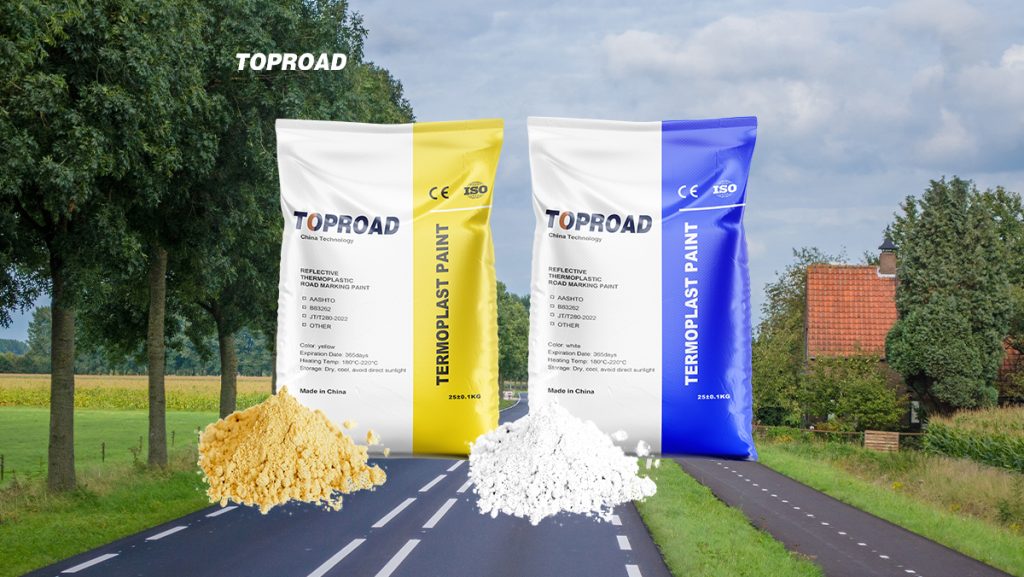

Our company is a professional manufacturer of road hot-melt coatings, road retroreflective measuring instruments, and road marking machines. If you are interested, please feel free to communicate with me via email at any time export@toproadtraffic.com


