Road Marking Paint and Machine Manufacturer
+86-15668659958
Road Marking Paint and Machine Manufacturer
+86-15668659958
Road markings are an important component of traffic language, and their construction quality directly affects road safety and service life. However, in actual construction, both experienced masters and new construction teams may encounter various technical difficulties. From yellowing, bubbles, and detachment of markings, to non-compliance with reflectance values and abnormal drying, every issue can potentially affect project acceptance and effectiveness. TOP ROAD Transportation Technology Co., Ltd., with nearly 30 years of deep industry cultivation, not only provides a full range of high-quality marking coatings, but also accumulates rich practical experience in dealing with various construction difficulties. This article will be based on TOP ROAD’s technical service practice, systematically sorting out the common problems, causes, and professional solutions of mainstream marking coatings such as hot melt, cold paint (room temperature solvent based), and two-component coatings in construction, aiming to provide practical technical references for frontline construction teams.
1、 Common Problems and Countermeasures in the Construction of Hot Melt Marking Coatings
Hot melt marking is widely used due to its excellent durability and reflective performance, but its construction process requirements are relatively high.
This is one of the common problems in hot melt construction, with various causes:
Excessive boiling of paint: In places where frequent intermittent construction is required such as intersections and factory areas, if the construction speed cannot keep up, the paint will be heated at high temperatures for a long time in the hot melt kettle, which will cause the resin and pigment to turn yellow.
Solution: It is recommended to complete the preparation work such as laying out as much as possible before construction, and carry out centralized planning. For situations where continuous operation is not possible, customers can be reminded to choose high-grade coatings with better resistance to yellowing, and to use low heat and slow heating during the initial boiling stage.
Mixing old and new materials or coatings from different manufacturers: Some construction companies, in order to save costs, mix the accumulated old materials with new materials or mix different brands of coatings, which can easily lead to uneven color and performance.
Solution: TOP ROAD recommends that customers establish a standardized material management process to avoid long-term accumulation of coatings and resolutely prevent the mixing of products from different brands. Each batch of products is accompanied by quality inspection records to ensure stable performance.
Construction base pollution: During construction on newly laid asphalt pavement, unstable asphalt oil or dirt carried by passing vehicle tires may contaminate the partially cooled markings.
Solution: For new asphalt pavement, it is recommended to open it to traffic for a period of time (such as more than 10 days) and wait for the road surface to stabilize before construction. Before construction, a simple test can be conducted, such as sprinkling water and rubbing to check for oil stains.
Environmental and storage factors: Improper storage of coatings in humid environments (such as the rainy season in southern China and summer in Henan Province) can cause moisture to evaporate during construction, resulting in the formation of bubbles and potentially affecting color.
Solution: Ensure that the paint is stored in a dry and well ventilated area. TOP ROAD has planned to upgrade its product packaging and add lining to better prevent moisture. For slightly damp coatings, they can be mixed with a sufficient amount of new material in proportion and used on roads with lower requirements, but attention should be paid to opening the feeding port during boiling to prevent steam splashing.
The problem of bubbles seriously affects the appearance and adhesion of the markings.
Moisture or oil stains on the base surface: This is the main reason. Rainwater, frost, or road oil stains vaporize and expand under the action of high-temperature coatings.
Solution: Before construction, it is necessary to ensure that the road surface is completely dry and clean. For situations where it is difficult to dry naturally, a fire gun can be used to assist in dehumidification.
Undercoat (primer) is not completely dry: After applying the primer, sufficient drying time should be left according to the ambient temperature, otherwise the solvent will evaporate and form bubbles when heated.
Solution: Strictly follow the drying time requirements of the base adhesive product, and do not apply it in advance to meet the deadline.
Road surface problems: Modified asphalt pavement, loose cement pavement, or pavement with large gaps can easily produce bubbles when the air or moisture contained in them is heated.
Solution: For such special base surfaces, it is necessary to communicate with the owner in advance about possible risks. It can be attempted to alleviate the issue by appropriately increasing or decreasing the material temperature (changing the flowability of the coating), but sometimes it is difficult to completely avoid it.
Glass bead scattering problem: Glass beads are the core of reflection. Insufficient or uneven spreading, or the use of glass beads with substandard roundness and refractive index, can lead to low inversion values.
Solution: Use qualified glass beads and ensure that the spreader is working properly and install a windproof cover. TOP ROAD offers various specifications of glass beads, ranging from regular to rainy night type, which can be matched according to project requirements.
Improper construction process: If the material temperature is too high or too low, it will affect the settlement ratio of glass beads in the coating, thereby affecting the reflective effect.
Solution: Strictly control the material temperature within a reasonable range based on the coating grade and ambient temperature. Winter construction requires an appropriate increase in material temperature.
Thickness of marking and whiteness of coating: Thin marking or insufficient whiteness or yellowing of the coating itself can also affect the final reflective effect.
Solution: Calibrate the equipment to ensure that the thickness of the marking meets the standard. For situations where the reverse value of the yellow marking is difficult to increase, caution should be exercised when using the “white material color matching” method to avoid color differences. High quality yellow material products should be prioritized.
Improper grassroots treatment: Dust, oil stains, water vapor on the road surface, or uncoated or unevenly coated primer can all lead to loss of adhesion.
Solution: Thoroughly clean the road surface before construction, use a fire gun to remove oil stains if necessary, and apply a sufficient amount of primer evenly.
Environmental and road impacts: Construction in extremely cold weather can cause rapid cooling and shrinkage of coatings; Construction on surfaces with poor adhesion such as cement pavement, smooth granite, and sidewalk bricks; Long term soaking of markings in water, etc.
Solution: Avoid applying hot melt coatings on extreme weather and uncomfortable surfaces. For cement road surfaces, it is recommended that customers use two-component or cold paint products with better adhesion, and inform them of the risks in advance.
Inappropriate coating or formula: incomplete melting of the coating, or the use of a formula that is not suitable for the current season (such as winter material used for summer), can cause the marking to become brittle and peel off.
Solution: Ensure that the coating is fully cooked and select products with corresponding formulas according to the season.
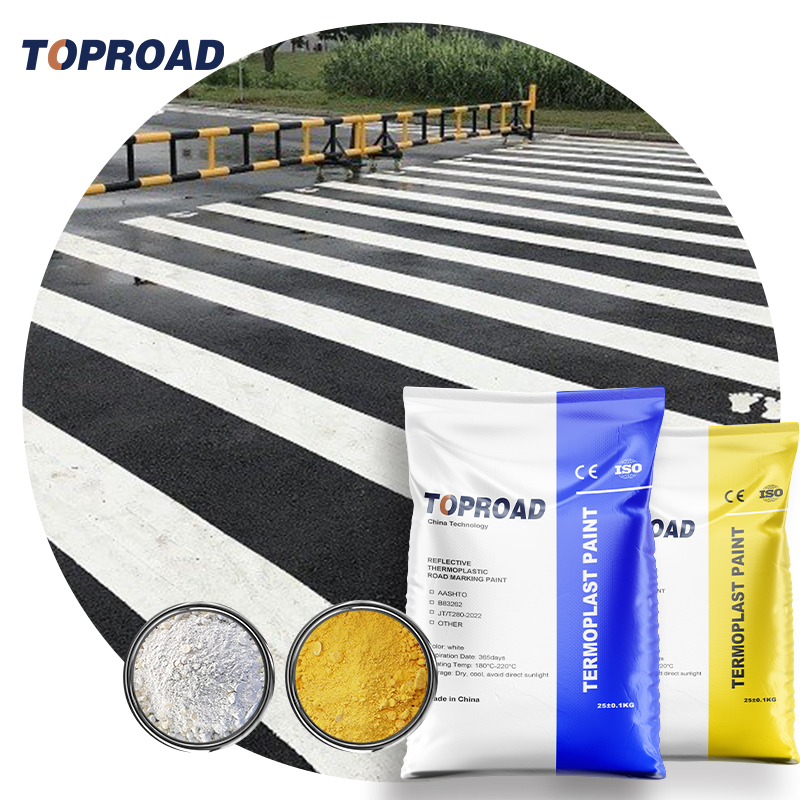
2、 Common problems in the construction of ambient temperature solvent based (cold paint) and two-component marking coatings
This type of coating is easy to apply, but equally sensitive to the environment and process.
Excessive dilution or uneven mixing of coatings: Adding excessive diluents or insufficient mixing before application can cause pigment settling and thin paint film.
Solution: Strictly follow the product instructions to add diluent (usually not exceeding a specific weight per barrel) and mix thoroughly.
Excessive or loose gaps in the road surface: New asphalt pavement or sandblasted cement pavement will absorb a large amount of paint, resulting in insufficient effective film thickness.
Solution: For road surfaces with large gaps, it is necessary to reduce construction speed, increase spraying times, or consider using thicker coatings. TOP ROAD’s technical team can provide specific parameter recommendations based on on-site conditions.
Low environmental temperature and humidity: The lower the temperature, the slower the solvent evaporates and the longer the drying time.
Solution: Pay attention to the construction environment, extend the maintenance time in low temperature and high humidity environments, and strictly prohibit traffic before it is completely dry.
Incorrect proportion of curing agent (two-component coating): Inaccurate distribution or uneven stirring of groups A and B can lead to rapid, slow, or even non curing.
Solution: Use specialized equipment to ensure precise proportioning and even mixing. TOP ROAD provides 24/7 technical support and remote guidance for ratio adjustment.
Moisture and stains on the base surface: Similar to hot-melt coatings, unclean base surface is the main cause of detachment. Solution: Ensure that the base surface is dry and clean before construction.
Construction on unsuitable base surfaces or old lines: Directly covering the surface of new asphalt pavement (oily) or old hot-melt markings with cold paint or two-component coating will greatly reduce the bonding strength. Solution: The new asphalt pavement needs to be stabilized before construction; The re drawing of old lines requires professional treatment (such as polishing and cleaning), or the use of specialized interface agents.
3、 General Problems and Systematic Solutions
Behind many construction issues are omissions in equipment, management, and communication.
Equipment maintenance and calibration: Wear of the hot melt kettle scraper can lead to uneven thickness of the marking line; The unstable walking system of the marking vehicle can cause distortion of the line shape; Long term lack of calibration of the anti reflection coefficient measuring instrument can lead to data disputes.
Solution: Establish a regular equipment maintenance system, replace key components (such as scrapers and nozzles) in a timely manner, and regularly send testing instruments for inspection and calibration.
Construction organization and communication: Poor communication with material suppliers and owners, distorted information transmission, are the root causes of many problems.
Solution: It is crucial to choose a partner like TOP ROAD that provides comprehensive technical support. Its nationwide service centers and 24-hour response mechanism can quickly assist in diagnosing problems, providing professional advice from material selection, process parameters to on-site emergency response. Before construction, fully communicate with the owner about the road condition and acceptance standards; Timely feedback of abnormalities during construction; After construction, jointly ensure the protection of finished products.
Construction of road marking paint, issues with road marking paint construction
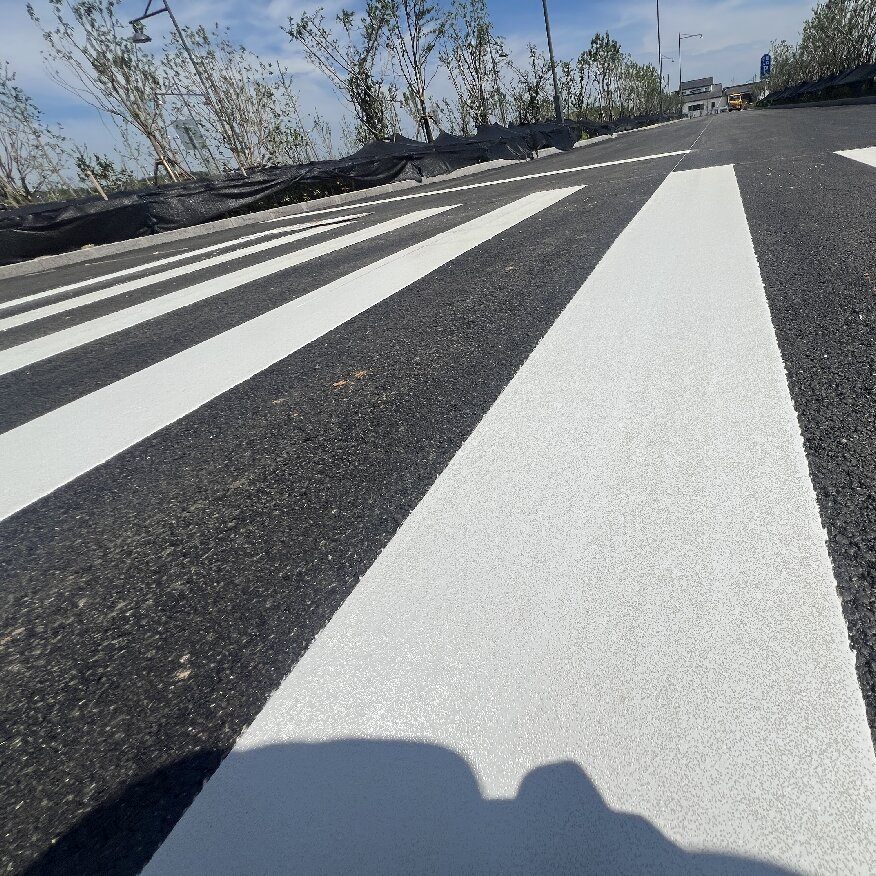
Road marking construction is a systematic project that integrates material science, process technology, and on-site management. Behind every perfect marking, there is strict control over the details. In the face of endless construction problems, it is better to prevent them beforehand than to remedy them afterwards.
TOP ROAD Transportation Technology Co., Ltd. is not only committed to providing stable performance and a complete range of marking paint products, but also transforms its years of construction experience into systematic solutions. TOP ROAD aims to become a reliable “technical support” for construction teams, from pre-sales road surveys and product selection recommendations, to guidance on process parameters and real-time answering of construction issues during sales, to after-sales quality tracking and technical support. Choosing to collaborate with such partners means that you not only receive a batch of materials, but also a complete guarantee system that can effectively avoid common pitfalls, improve construction efficiency, and achieve a one-time acceptance rate.

Our company is a professional manufacturer of road hot-melt coatings, road retroreflective measuring instruments, and road marking machines. If you are interested, please feel free to communicate with me via email at any time export@toproadtraffic.com


