Road Marking Paint and Machine Manufacturer
+86-15668659958
Road Marking Paint and Machine Manufacturer
+86-15668659958
Hot melt reflective coatings have thermoplasticity and must be heated and melted for use. Glass microspheres are added to achieve reflection, also known as thermoplastic reflective marking coatings or melt type reflective marking coatings. They can withstand sunlight, rain, snow, freezing, and vehicle impact wear, and are widely used on various road surfaces.
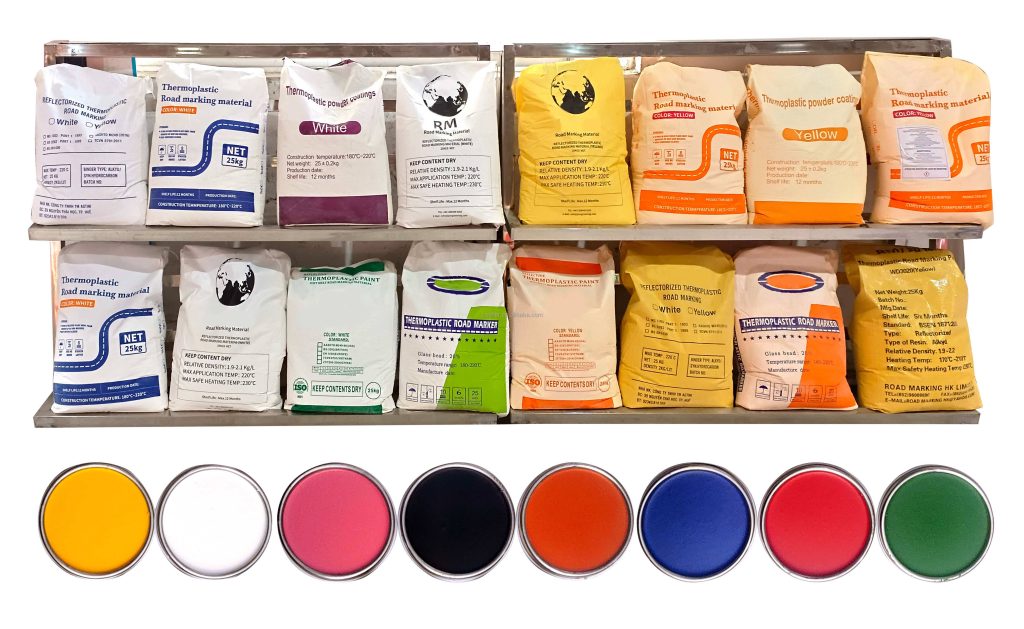
The commonly used hot melt marking paint on the market has some small knowledge that cannot be ignored. Hot melt marking paint often produces bubbles during application. Although this defect does not affect its service life, upon closer inspection, it affects its appearance, which has troubled many construction team workers. The next little knowledge is mainly about the reasons for paint bubbles.
Hot melt marking paint takes 3-8 minutes to dry on the road when the temperature is around 200 degrees Celsius. During these minutes, the fine gaps on the road are heated upwards by the air, causing the paint to expand. The appearance of large bubbles will cause the coating to break and rupture; The small bubble markings have dried and are left in the coating or at the bottom of the markings, which only affects their appearance; The bubbles have just emerged from the film surface, and the coating has dried, leaving behind pockmarks, which also affect the appearance. Solution: Reduce the material temperature by 5-10 degrees, increase the viscosity of the coating, prevent bubbles from rising, and keep them within the marked line. Raise the material temperature by 5-10 degrees to improve the leveling of the coating, reduce the viscosity of the coating, and allow bubbles to escape.
Nowadays, in order to cool down, highways are replaced with asphalt roads. Asphalt can absorb heat and prevent cracks from appearing on the road surface. When switching to asphalt road, a modifier was added, which often produces bubbles when encountering hot melt marking coatings. Solution: About 0.1% soybean oil (or salad oil) can be added during the burning process, sacrificing the compressive strength of the marking and increasing the leveling of the material to reduce bubbles and meet the requirements of the owner.
Moisture in damp roads can evaporate due to heat, resulting in bubbles. Therefore, before construction, it is necessary to check the dryness of the road and pay attention to humidity.
Cement roads with excessive alkalinity can also cause foaming during the application of hot-melt marking coatings, as roads with excessive alkalinity have severe dust absorption. Clean with a dust collector before construction.
The looseness of cement roads is rare, and it is considered a win when encountered. It can only be balanced by applying a second layer of bottom oil and adjusting the material temperature.
Before the bottom oil is dried, the solvent in the bottom oil is not completely evaporated, and it will produce bubbles when heated and evaporated. Scratching can only be applied after the bottom oil is completely dry, otherwise it may not only cause bubbles, but also lead to the explosion of the undried bottom oil, causing safety accidents.
Our company is a professional manufacturer of road hot-melt coatings, road retroreflective measuring instruments, and road marking machines. If you are interested, please feel free to communicate with me via email at any time export@toproadtraffic.com